 RSS Feed
 Email Feed
Home > Coffee Table
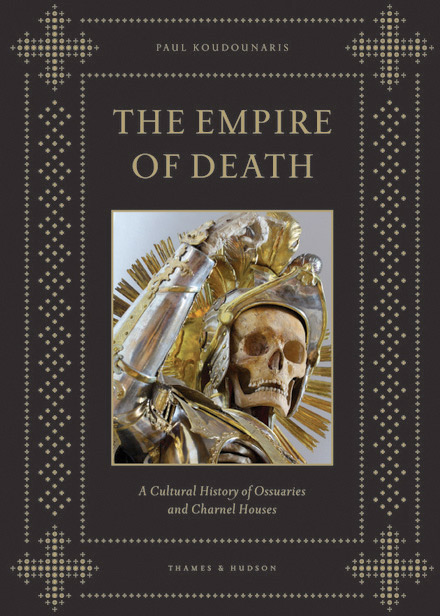
Humans haven’t always tried to hide death away-it’s only relatively recently (and in Western culture)-that we’ve decided death has nothing to do with life and we want nothing to do with it. As though not thinking about something will keep it from happening. (This is something Caitlin Doughty addresses wonderfully in her book Smoke Gets in Your Eyes , which I reviewed last week.)

by Paul Koudounaris. Loggia of the Oratory of Sant’Anna. Poshiavo, Switzerland
The Empire of Death: A Cultural History of Ossuaries and Charnel Houses by Paul Koudounaris is what it says on the tin, but it’s so much more, as well. It has 290 photographs, 260 of them are in colour. The average person wouldn’t be able to visit all of the sites he did, so perhaps the tag should have been: The Empire of Death: Koudounaris Confronts Mortality in Seventy Places Since You Couldn’t Afford to.
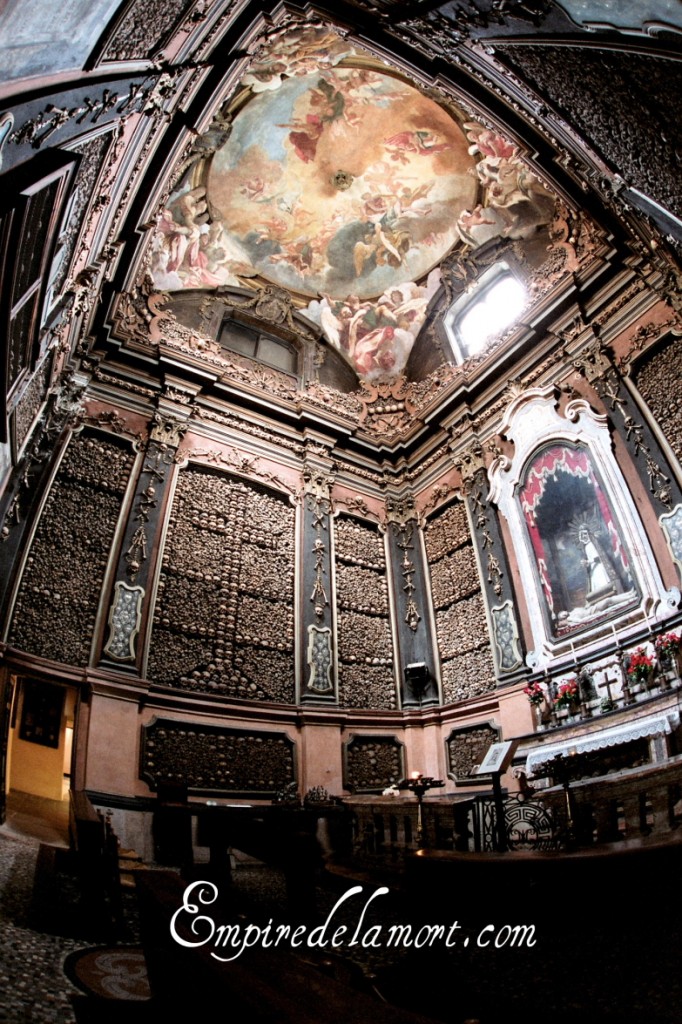
by Paul Koudounaris. Church of San Bernadino Alle Ossa. Milan, Italy.
Because that’s essentially what happens when looking at the photographs. If you really take the time to look at them it has a similar humbling effect of contemplating the size of the universe. Every skull was once a person with hopes and dreams and families who fought and laughed and loved. It’s an exercise in existentialism.

by Paul Koudounaris. Ossuary Chapel of San Marino Della Battaglia. San Martino. San Martino, Italy.
Which was the intent of the original designers. They were created for people to sit in and contemplate their own mortality-to be aware that they weren’t going to live forever and so they’d better act properly because eternity was a very long time to spend in hell and/or separated from their loved ones who would no doubt be in heaven. Often there would be quotes on the walls, one of my favourites was from the Chapel of Bones of Valleta, Malta:
The world is a theater and human life is the boundary of all worldly things. Life is the personification of vanity. Death breaks and dissolves the illusion and is the boundary of all mortal things. Let those who visit this place ponder well these maxims and carry with them a lively remembrance of death. Peace be with you.

Chapel of Skulls. Valletta, Malta
I’ve long been a fan of charnels-since I visited the Capuchin crypt by the Santa Maria della Concezione del Cappuccini in Rome and was rushed out before I could properly appreciate the chandeliers made of human bones. And all of the well-known sites are included including that one. Sedlec , the Paris Catacombs , etc, but many that I hadn’t heard of and quite a few that had been destroyed, either by nature or humans, were covered, as well.

Capuchin crypt. Santa Maria d Concezione. Rome.
People weren’t all bad, there was a resurgence in charnels in the 19th century where several were restored and some are being restored now. The Eggenberg charnel in Austria has something of a Hannibal touch, where they created an eye shape, as it was meant to be viewed from the top of a well with skulls as the pupil, looking back at the viewer.

by Paul Koudounaris. Eggenberg, Austria Charnel (Beinhaus).
It’s well-researched and well-written and with maps and notes galore it’s sure to please those interested in unusual facts about history or interesting sites to visit. Or people comfortable with their impending doom (or who want to become so). So if you’re looking for something for that person on your shopping list this holiday season, here’s something to consider.

by Paul Koudounaris. Chapel of Bones. Faro, Portugal.
Koudounaris has a website empiredelamort that has loads more photos.
He’s also on Instagram under hexenkult.
And on Facebook .
Dahlia Jane also wrote a lovely review, with more photos, on her blog Upon a Midnight Dreary .
